What makes Q~vibes different
Remarkable features
Q~vibes combines the freedom of an open-source wiki with regulatory compliance, AI-enabled automation, and the simplicity of a cloud SaaS model without vendor lock-in.

Quality management as a connected knowledge system
Traditional QMS tools behave like separate compliance repositories. Employees use them because they must, not because they help daily work. Q~vibes takes a different approach: it turns quality management into a connected knowledge system. Documents are not only stored, approved, and archived — they are connected as meaningful knowledge objects with requirements, risks, tests, records, and audit evidence.
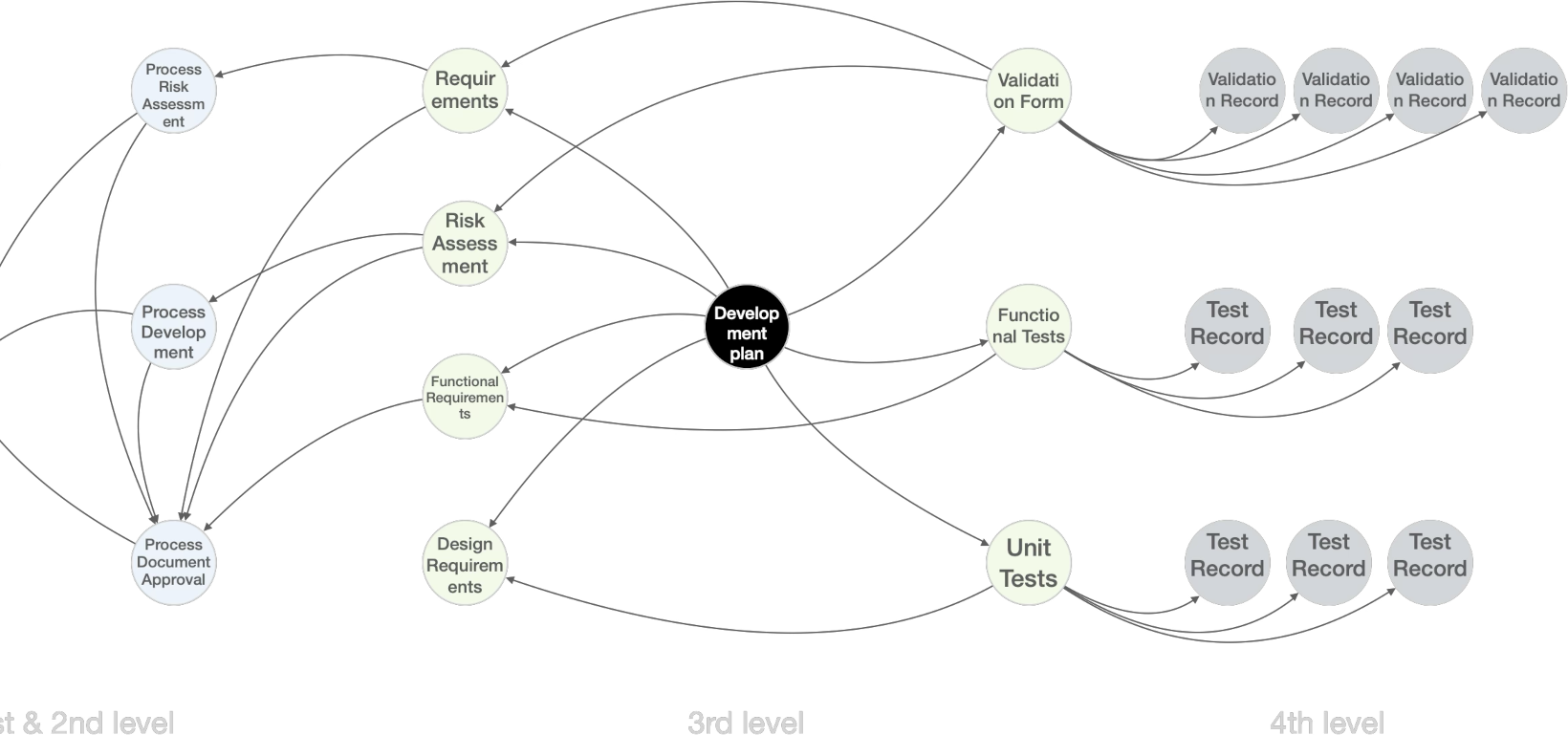
Open-Source Wiki Foundation
Q~vibes combines an open-source wiki foundation for everyday company knowledge with the regulatory controls required for a professional QMS.
Teams can freely create, edit, link, and share knowledge, while regulated content can move into managed areas with document control, approvals, audit trails, and lifecycle status.
Because the same tool supports daily collaboration and formal quality management, QMS processes stay close to everyday work instead of living in a separate compliance repository.
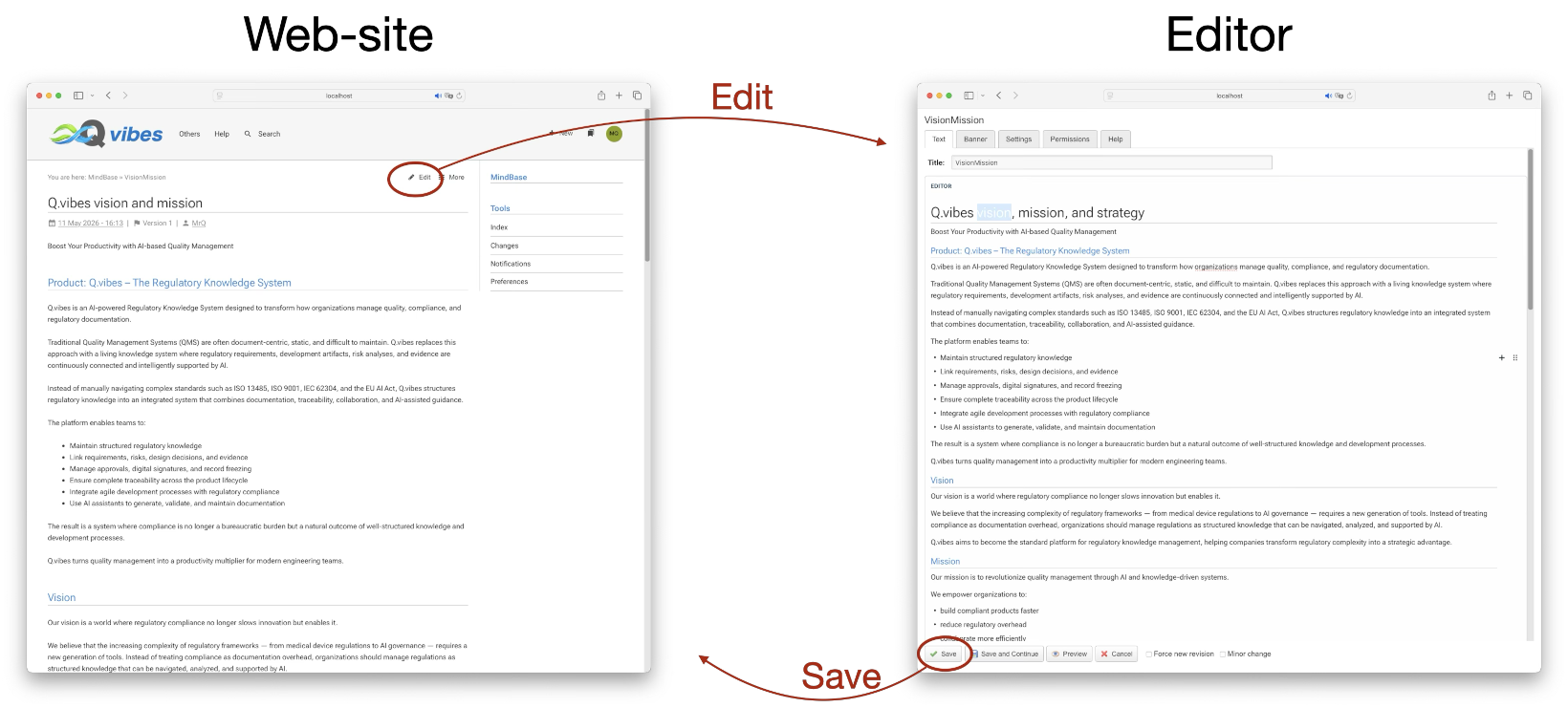
Compliance foundation
Q~vibes extends the open-source wiki foundation with the regulatory controls a professional QMS needs.
Document pyramid — no control break
Many systems handle high-level controlled documents but leave operational documents and records fragmented. Q~vibes closes that control gap.
No control break between templates and operational documents or records. Records are generated inside the system from controlled templates — no download, fill-out, re-upload loop.

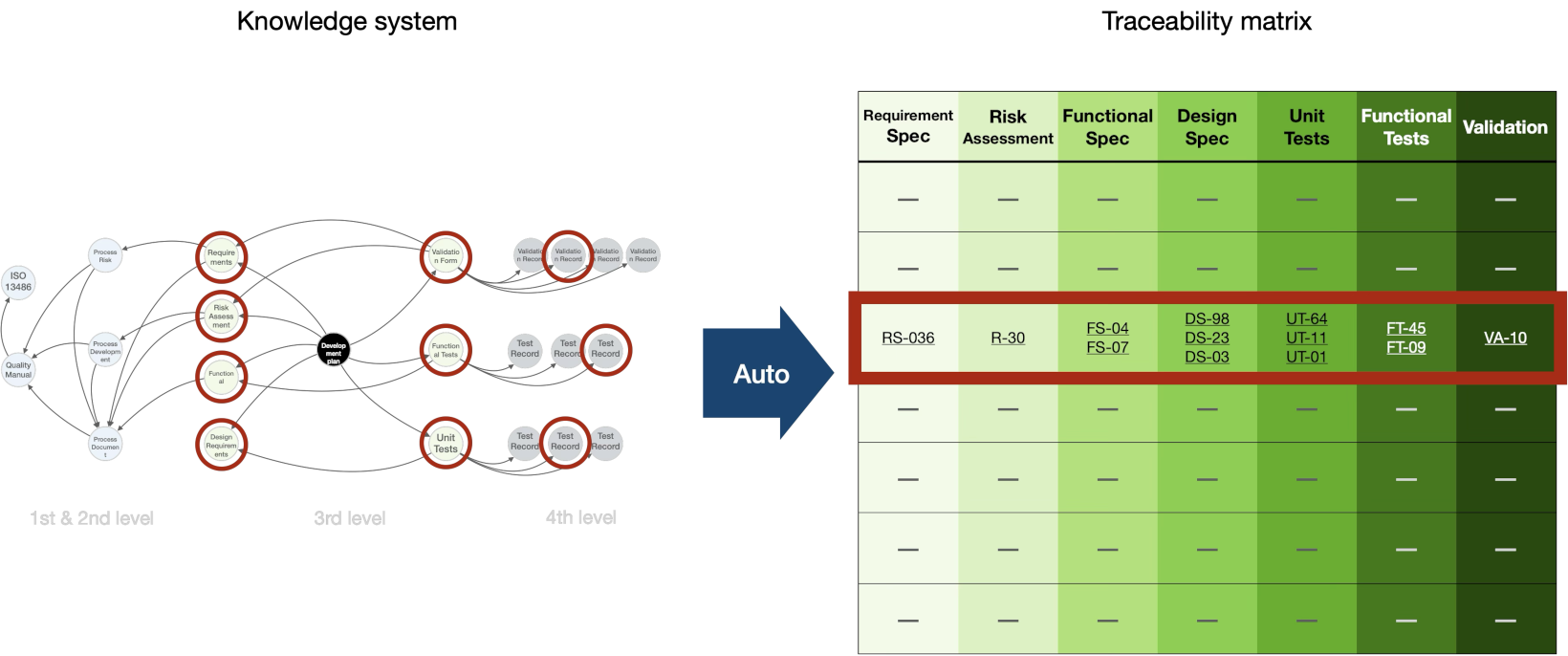
Automatic Traceability
Traceability becomes a living capability instead of a manual spreadsheet created late for an audit. Teams see coverage, gaps, and dependencies earlier.
In Q~vibes, traceability emerges automatically from the regulatory knowledge graph. When requirements, risks, tests, validation records, procedures, and evidence are connected in daily work, the system can derive traceability from those relationships instead of asking teams to rebuild it manually at the end.
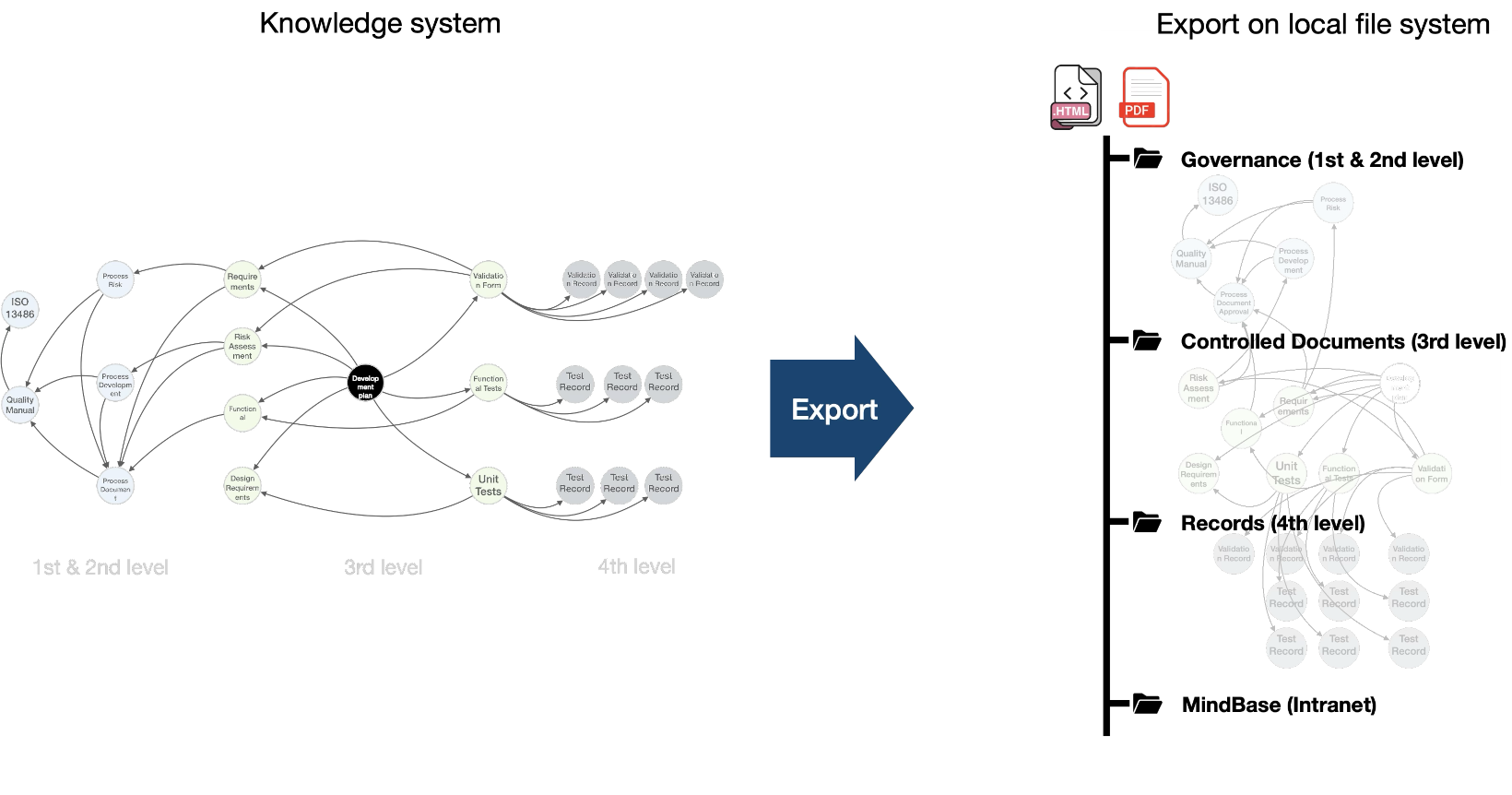
Connected PDF Export for Audits
Starting from a central document, the system collects the relevant connected documents and creates a structured export with linked HTML and PDF outputs — coherent, navigable evidence packages.
Because the export follows the relationships in the regulatory knowledge graph, audit evidence can be assembled from the actual connected context instead of manually collecting files from separate folders and systems.
Built-In Form and Template Generator
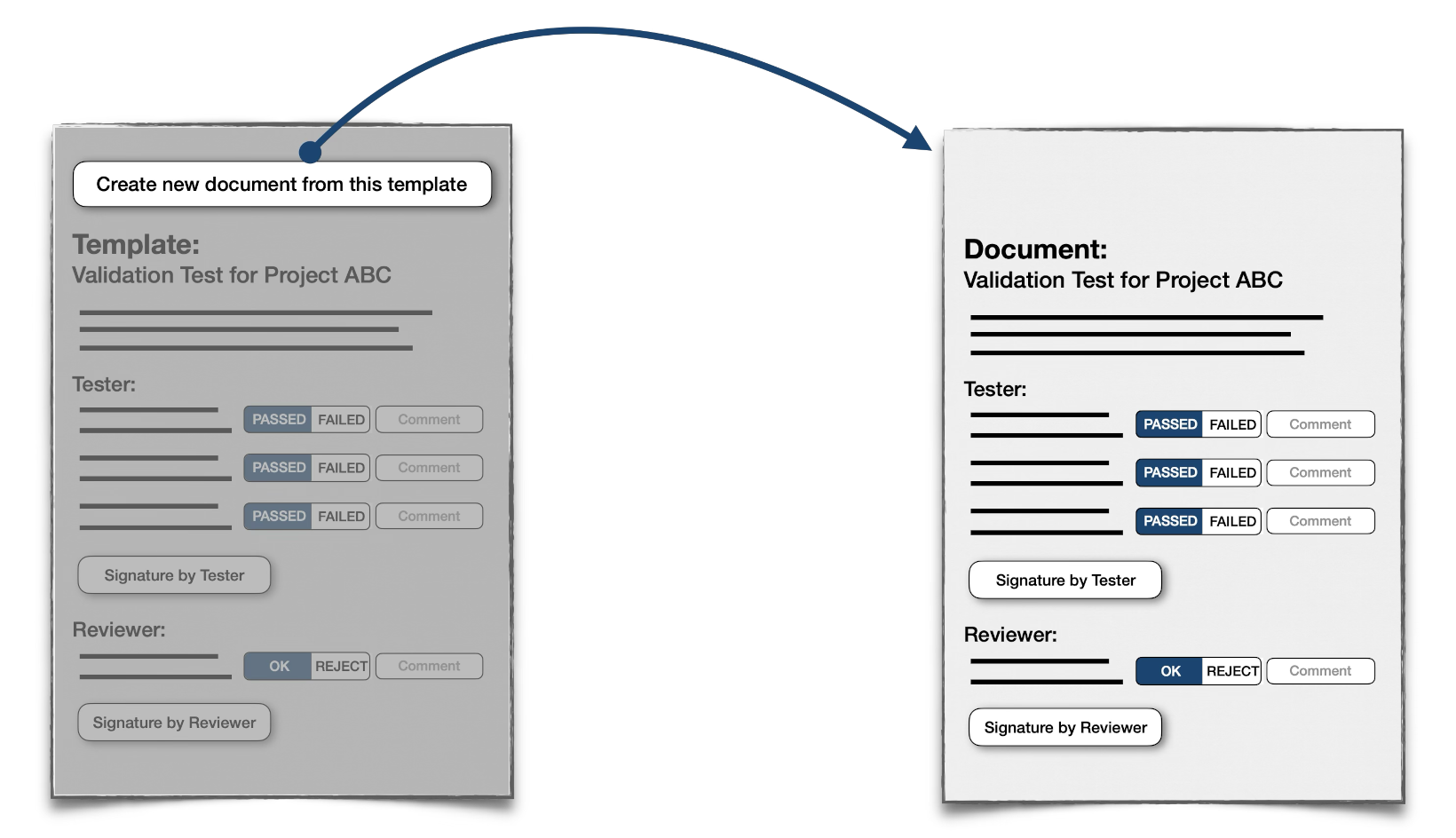
Approved templates become executable working documents. Users create new operational documents directly from controlled templates and generate records inside the managed system.
This keeps the full workflow under control: teams do not have to download a template, fill it out somewhere else, and upload the result again. The working document and the final record stay connected to the approved template and the surrounding QMS context.
Nested Digital Signatures
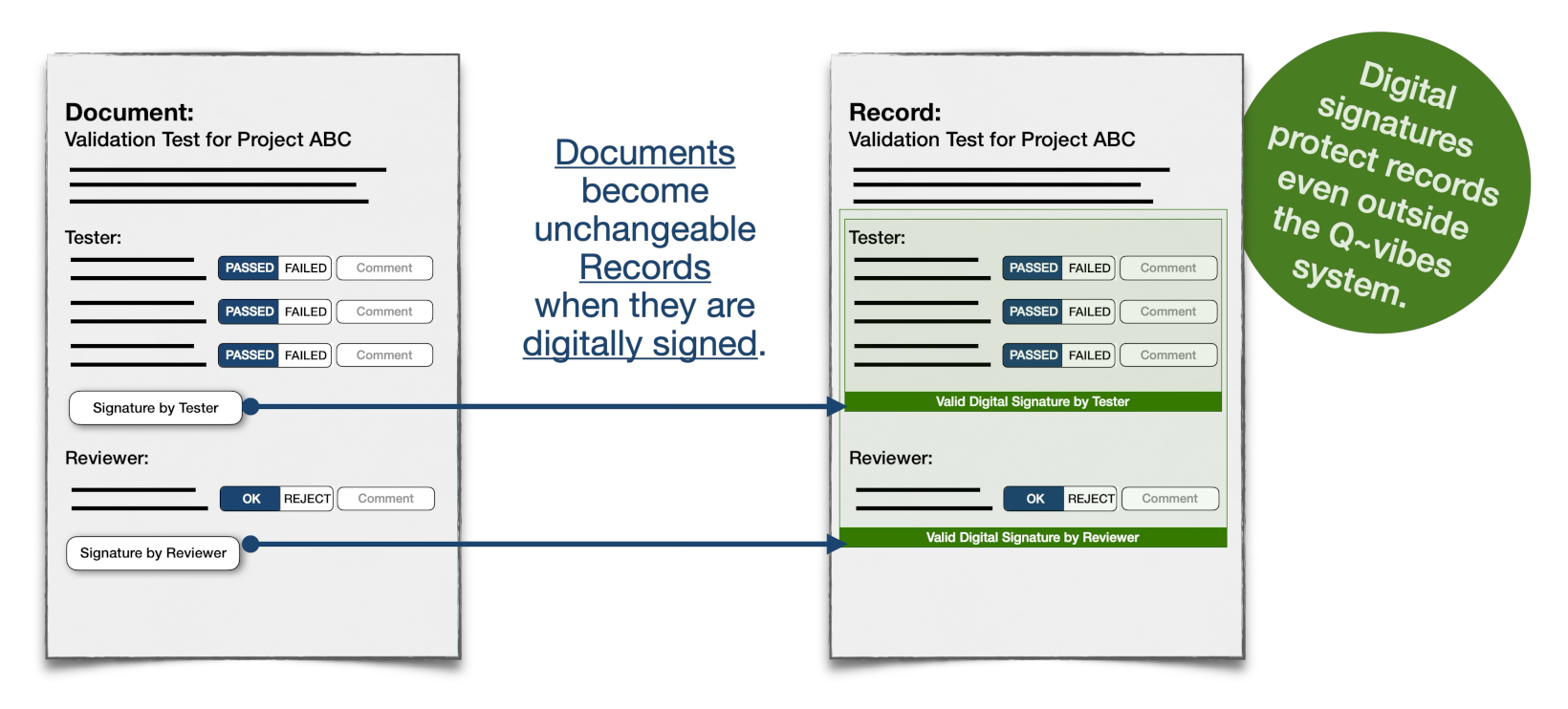
A tester signs a completed section; a reviewer later signs a higher-level scope including the tester's signed content. Clear approval chain, FDA 21 CFR Part 11-oriented integrity.
Each signature preserves the signed context and becomes part of the next review scope, so approvals can build on earlier completed work without losing the integrity of the original sign-off.
Support for the Company's Compliant AI Agent
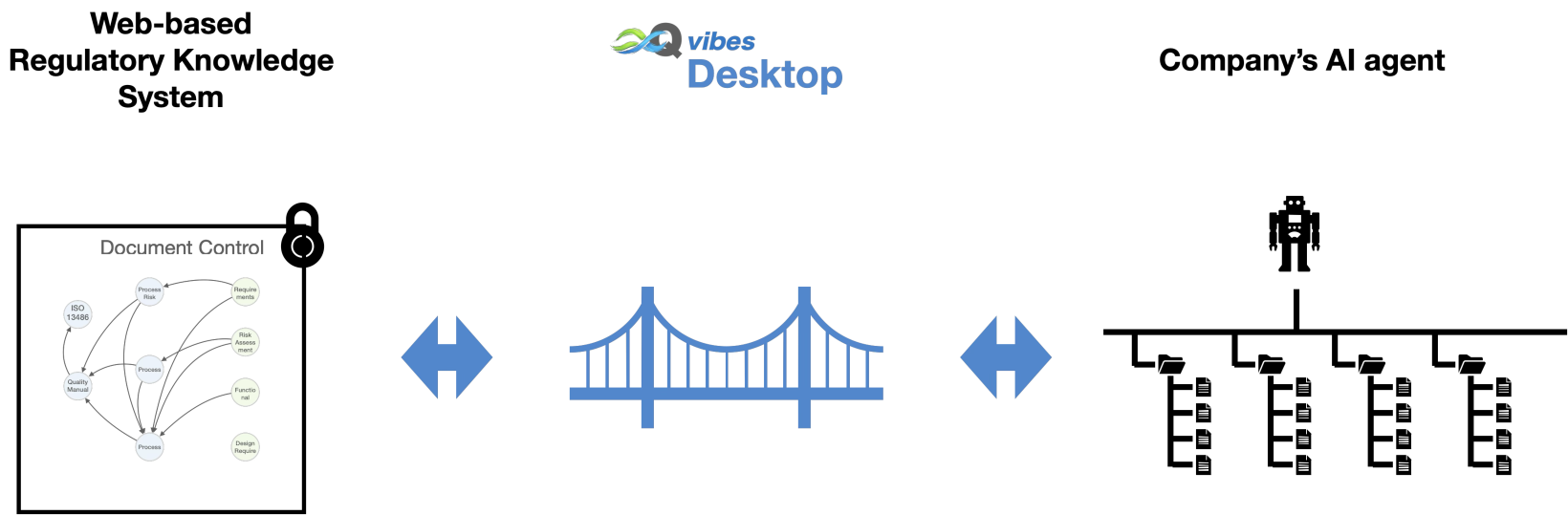
Q~vibes Desktop bridges the controlled web-based system and the company's approved AI agent — AI acceleration without bypassing internal AI policies.
Teams can use AI assistance close to controlled QMS content while keeping the approved system, access rules, and company AI governance in the loop.
Programmable Wiki
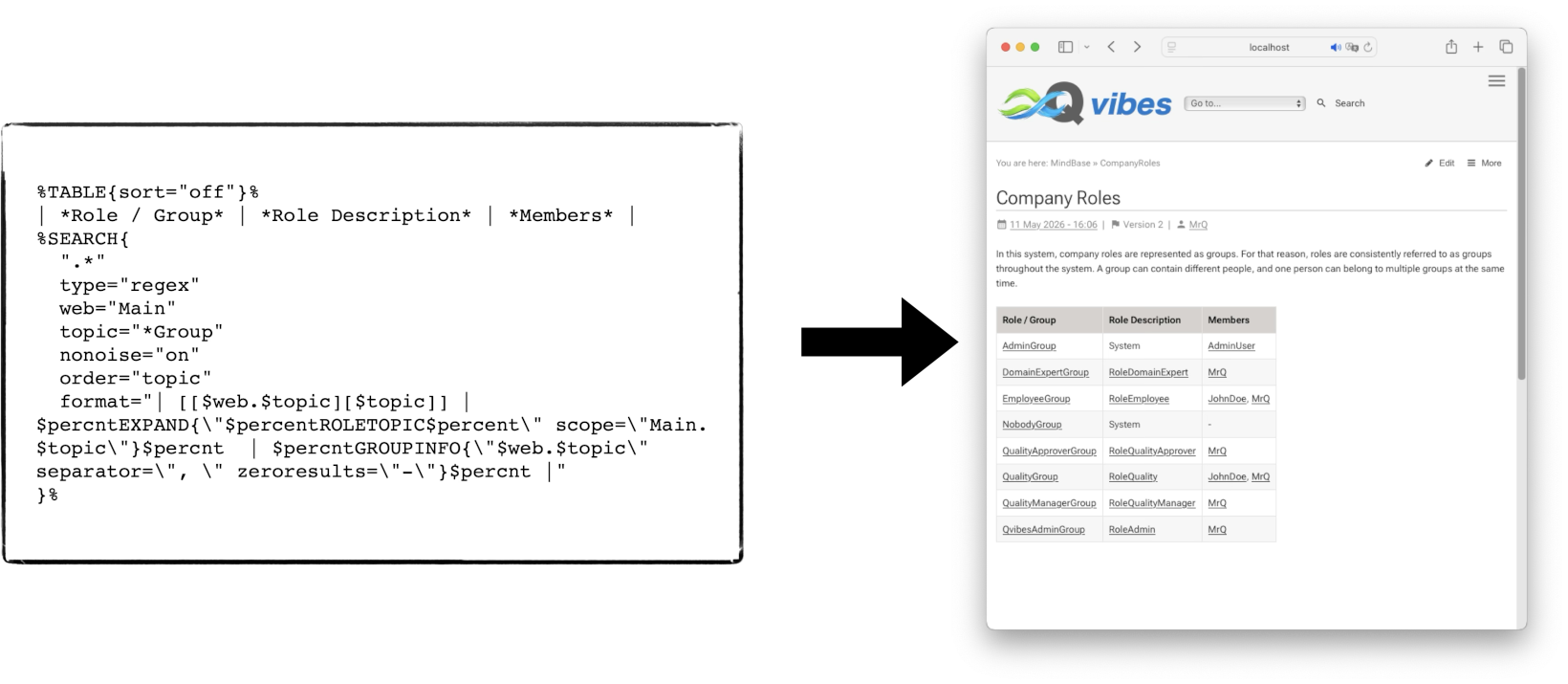
Q~vibes is not a static wiki: users can add simple code snippets to pages that collect information from the system automatically and turn it into live tables, lists, reports, or overviews.
This makes the wiki highly adaptable to each company's use case. Teams can generate a table of users, a list of specifications, or any other structured view from existing knowledge instead of waiting for a fixed vendor feature.
Cloud-Based SaaS Without Vendor Lock-In
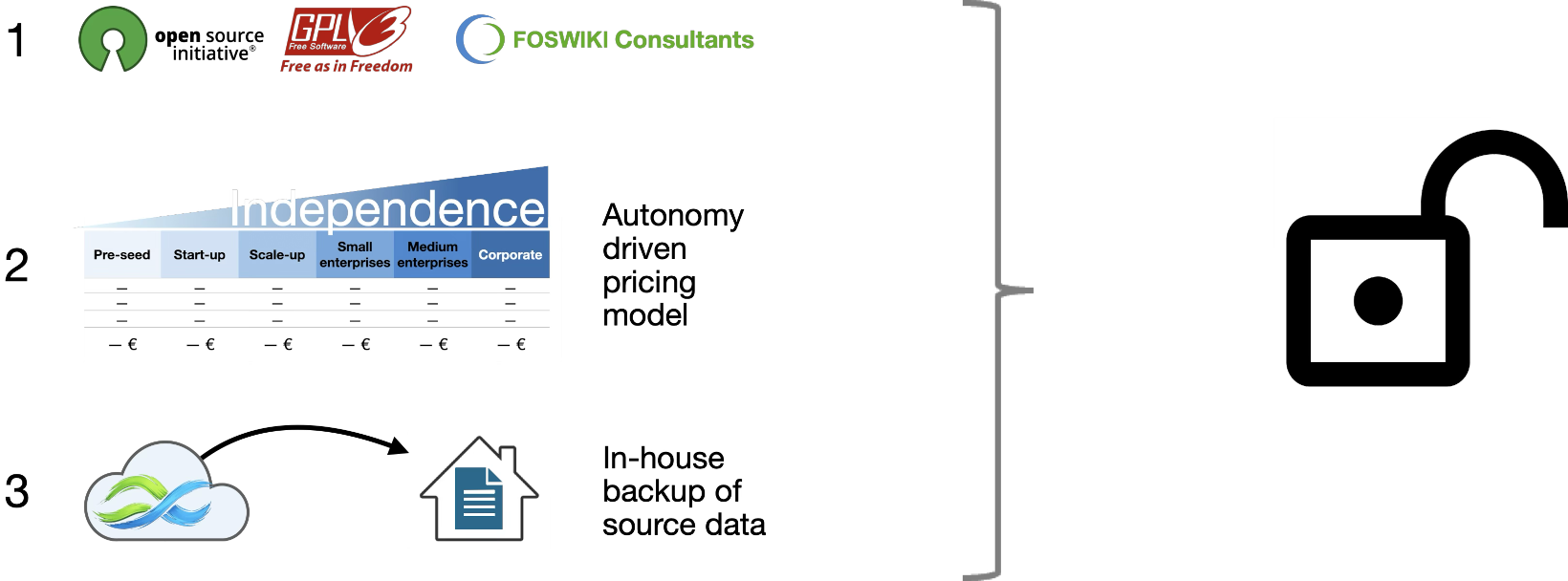
Open-source foundation, autonomy-driven pricing, and in-house backup of source data in readable text-based form. Designed to make customers more capable over time, not more captive.
Customers can benefit from a managed cloud service while keeping their knowledge base portable, understandable, and backed up in a form their own team can inspect and preserve.
See it on a plan
Pick the right starting point for your team — start risk-free with Seed.